CAS partners with Rock Bridge Memorial SP for Urban Night Sky Place Certification
by Allison Vaughn, Communications Chair
 In 2025 at the Daniel Boone Regional Library, CAS heard from Dr. Vayu Gokhale, a physics professor at Truman State University who is deeply involved in DarkSky Missouri, a voluntary effort to promote dark skies at night, not just for stargazing but also for human and wildlife health. He talked to us about the need for altering our lighting to promote safety while also preserving our night skies. Slides from his 2023 Missouri Bird Conservation Initiative Conference presentation can be found at mobci.net on the right panel of previous conference presentations. If you missed his talk at the library for CAS, this powerpoint presentation will give you a good rundown on what you need to know.
Also in 2025, a small committee of members of CAS met with the Missouri River Bird Observatory, the U.S. Fish and Wildlife Service, and the City of Columbia’s Office of Sustainability to promote dark skies in Columbia. Some of you may have seen articles in various slick magazines that Columbia is promoting itself as a dark sky location, but in reality, to see celestial happenings like the Northern Lights or meteor showers, one must travel out to McBaine (the Bur Oak is a favorite location) or to even as far as Moberly. However, CAS is working to change that. This small subcommittee has partnered with Rock Bridge Memorial and Finger Lakes state parks as well as MRBO to secure Urban Night Sky Place designation for the two state parks. With the generous help of a Missouri Master Naturalist, Jarrett Whistance, who has been instrumental in taking Sky Quality Measurements to measure the night sky lights we’re close to submitting the preapplication for Rock Bridge Memorial SP. His readings indicate that Rock Bridge is well within the range of being designated as an Urban Night Sky Place, a designation that was bestowed upon Thousand Hills SP recently. Thousand Hills SP is in Kirksville, very close to Truman State University, had a lot of assistance from Vayu and others in the DarkSky Missouri community.
However, our DarkSky subcommittee for Rock Bridge Memorial SP will be focusing on this effort in 2026, filling out the preapplication and monitoring night lights at the park. It has been suggested to secure this designation for the park before we move to the City of Columbia, which already has a relatively progressive lighting plan to replace lights with appropriate Dark Sky certified specifications. To note, longtime member and inveterate birder Edge Wade’s husband Jerry Wade was instrumental in working on responsible lighting plans in the city before his untimely passing several years ago. Many of his ideas were adopted by the City of Columbia and planners have referenced his concepts during meetings with the CAS subcommittee.
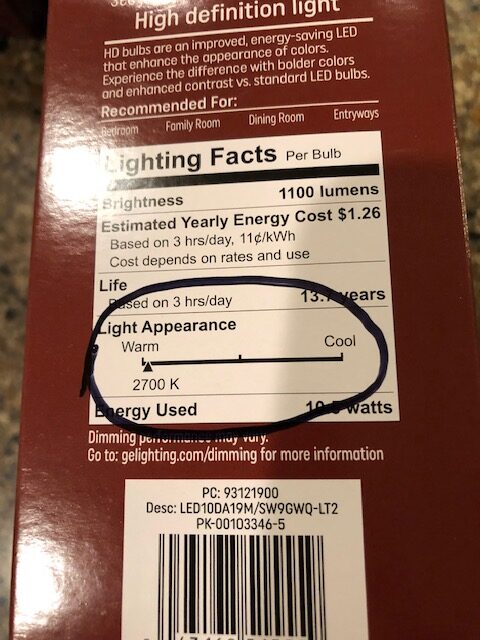 As the subcommittee works to complete the preapplication, I wanted to let you know there is a lot that landowners can do to reduce light pollution that will help wildlife and human health. Conservation Chair Bill Mees has already made these changes. He lives in a neighborhood with many houses and he has changed his outdoor lights. The Dark Sky friendly lights are rated at 3000K or less. Bill and Jan replaced their outside bulbs rated as 2700K. This is something all of us can do right away. One can use the 5000K bulbs inside the house rather than outside. Every effort counts. Our subcommittee will be going to City Council or at least he Office of Sustainability in coming months to promote “lights out” during migration in May. To learn more about the DarkSky movement in Missouri, visit www.darksky.org. Columbia Audubon is proud to be a partner in this important movement.